Built with Apple WeatherKit data

Public Agent Katarina Muti Aka Ariel Temple Exclusive May 2026

iPhone iPad Apple Watch Widgets

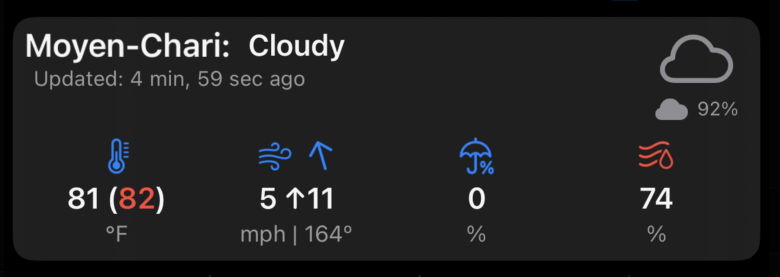
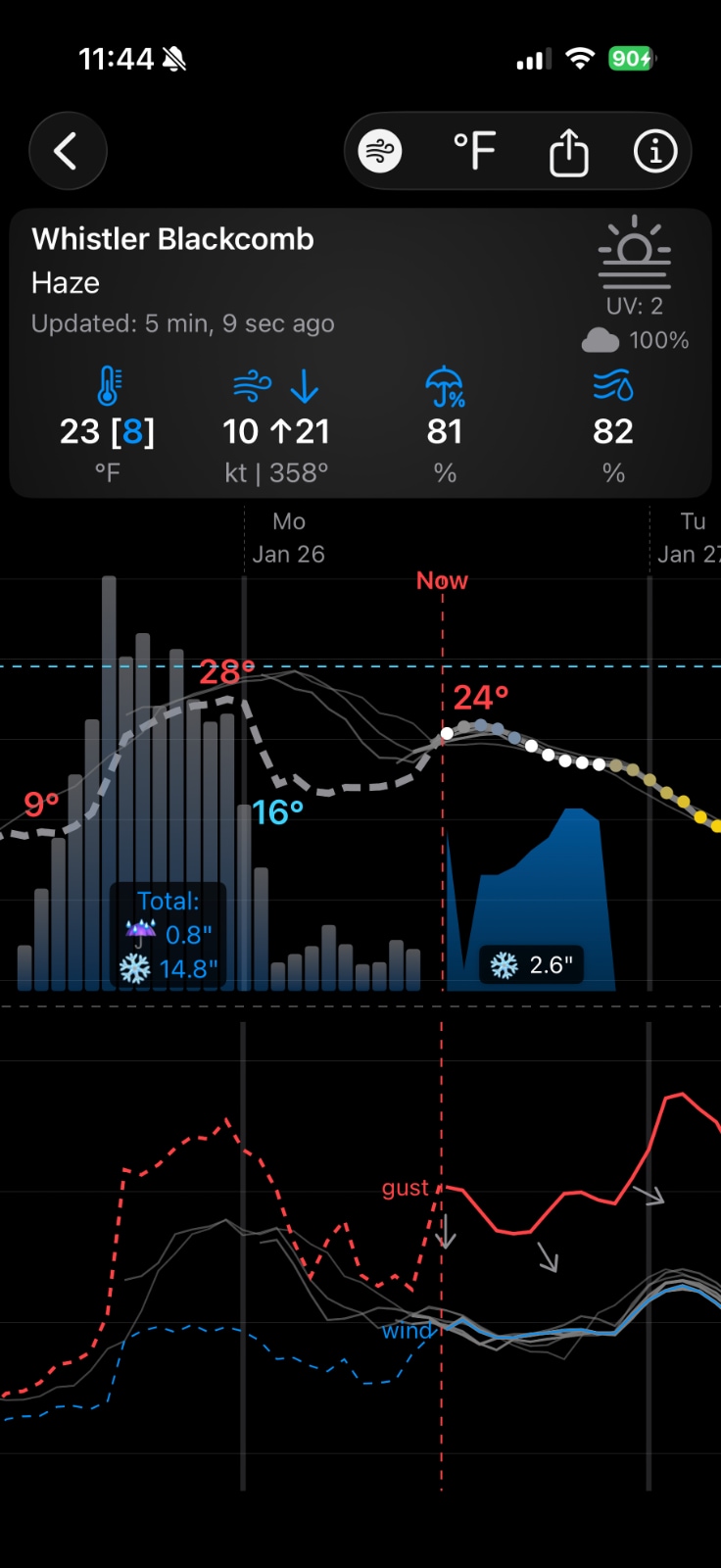
Weathercaster turns forecast data into a fast visual read. Read cloud cover from point color, precipitation from blue shading, and current conditions from a compact header, then tap and hold to inspect the forecast in detail.Learn more

5-star average review
Indie App independently made
Privacy No data collection
Weathercaster screenshot showing current conditions, forecast chart, and wind chart

Public Agent Katarina Muti Aka Ariel Temple Exclusive May 2026

I need to determine the scope. The user wants a "deep paper," so I should create a detailed analysis, possibly exploring the character's background, roles, thematic significance, and narrative functions. Including fictional elements is okay if I make up plausible aspects, but I should clarify that in the disclaimer.

Potential challenges include creating a coherent background without real references. I'll need to invent a plausible backstory, ensuring consistency. Maybe Katarina is an agent in a near-future setting dealing with public trust and moral ambiguity. The alias "Ariel Temple" might hint at religious or symbolic themes, so I can tie that into her character development. public agent katarina muti aka ariel temple exclusive

Lastly, ensure the paper is academically styled but acknowledges the fictional nature of the subject. This approach meets the user's request for depth while being transparent about the original content creation. I need to determine the scope

Simultaneously, Ariel Temple exists as a decentralized myth. Through encrypted forums, viral art installations, and anonymous broadcasts, Temple critiques the MPI’s erosion of civil liberties, exposing internal corruption while mobilizing a network of "trust hackers." The persona of Ariel Temple is a collective invention, yet its source is whispered to be Katarina herself—a double life that blurs the boundaries of truth and performance. III. Dual Identity Analysis: The Dialectics of Governance 1. Performative Authenticity Katarina’s public persona thrives on performative transparency , using staged public events, open-source policy documents, and livestreamed decision-making to cultivate trust. However, her work as Ariel Temple undermines these efforts. By leaking classified data and orchestrating disruptions (e.g., "trust strikes" where citizens demand in-person verification of state records), Ariel forces the public to confront the artificiality of Katarina’s institutional authority. The alias "Ariel Temple" might hint at religious

The user might be an academic student, a writer, or a fan creating content for a shared universe. They could need this for a class, a creative writing project, or a fan site. The mention of "exclusive" suggests the paper should present unique insights not found elsewhere. Since the character is fictional, all insights will be original, which I should note.

This paper examines the enigmatic figure of Katarina Muti, a public agent operating under the alias Ariel Temple, through the lens of political theater, moral ambiguity, and the paradox of transparency in modern governance. Using speculative analysis and fictionalized case studies, the paper explores her role as a hybrid figure: a bureaucratic operative and a symbol of resistance, a public steward and a clandestine revolutionary. The duality of her identity—Katarina as the institutional architect and Ariel as the subversive icon—reflects the tension between state authority and public accountability in a hyper-surveilled world. I. Introduction: The Myth of the Public Agent The concept of the "public agent" is rooted in the Enlightenment ideal of a neutral, rational bureaucrat serving the common good. Yet in the fictional realm of speculative governance—often portrayed in cyberpunk, dystopian, or anarchist literature—the public agent becomes a paradoxical figure. This paper centers on Katarina Muti , a character from an imagined near-future world, who operates under the persona of Ariel Temple , a grassroots activist. Through her dual identity, Muti embodies the conflict between systemic control and individual agency, offering a case study for analyzing the ethics of identity in governance. II. Background: Katarina Muti and the Rise of Ariel Temple 1. The Architect of Trust Katarina Muti is introduced as a high-ranking agent in the Ministry of Public Integration (MPI) , a fictional governing body overseeing information transparency and social cohesion in a climate of perpetual crisis. Her role involves mediating between the state and the populace, ensuring "trust compliance" through data audits, public demonstrations of accountability, and symbolic rituals of participation. Within her official capacity, Katarina is the face of bureaucratic order—an unflinching enforcer of procedural rigor.

I should structure the paper into sections: Introduction, Background, Dual Identity Analysis, Thematic Exploration, Narrative Role, Conclusion. Each section will delve into different aspects, using creative analysis. Since the character is fictional, I need to make clear that the analysis is based on a constructed profile.
Built around the chart

Weathercaster's core idea is simple: show more useful forecast context in a format you can scan quickly instead of making you bounce between dense tables and tiny icons.

Chart-first weather

Cloud cover, precipitation, and trend changes in one glance

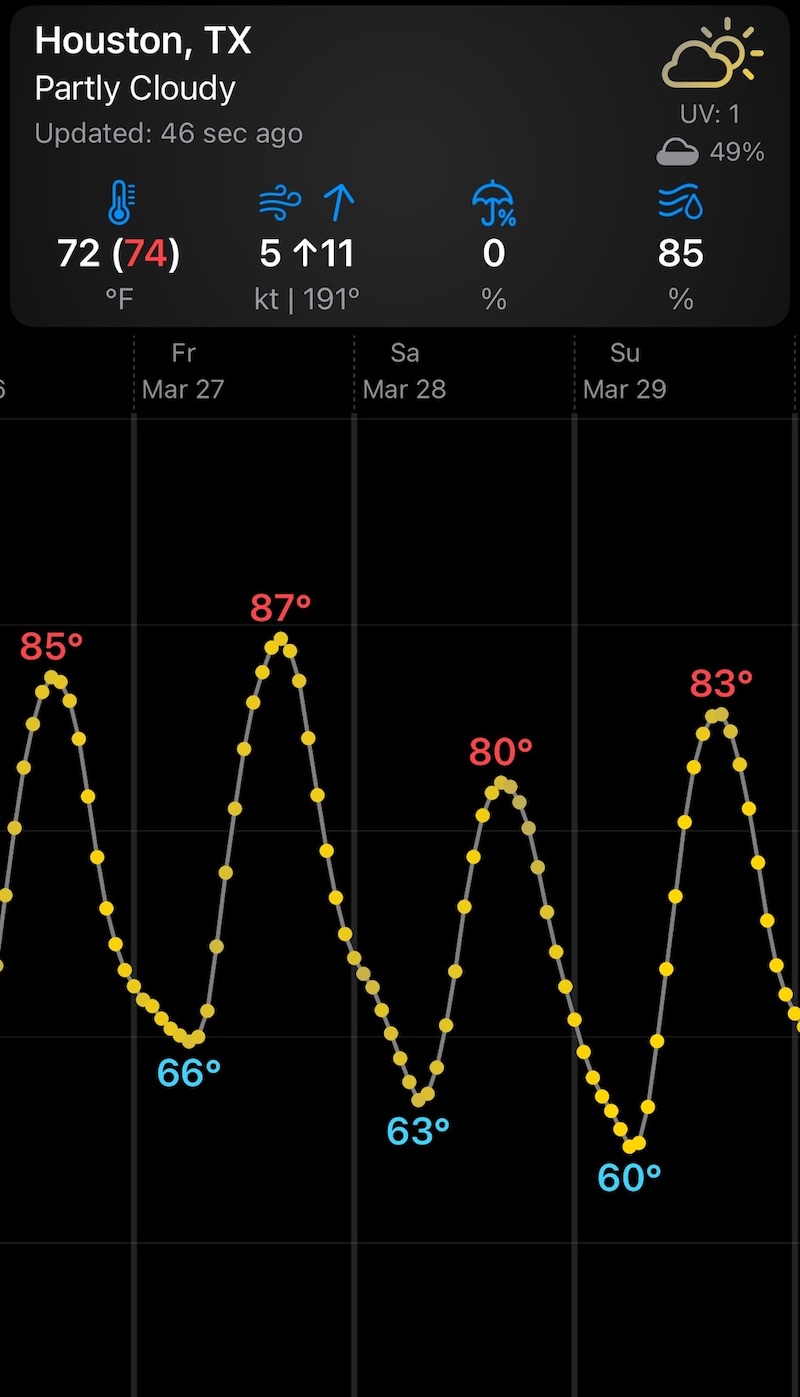
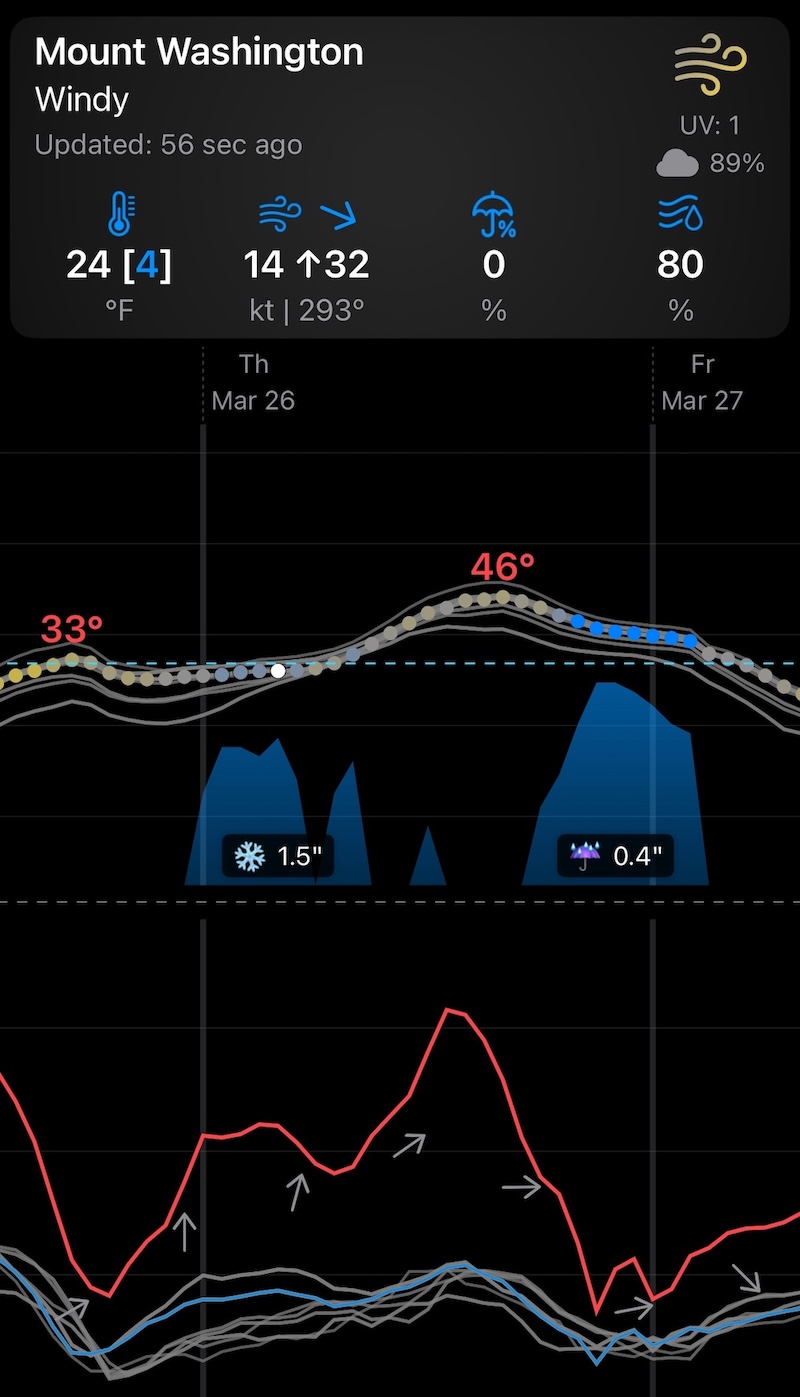
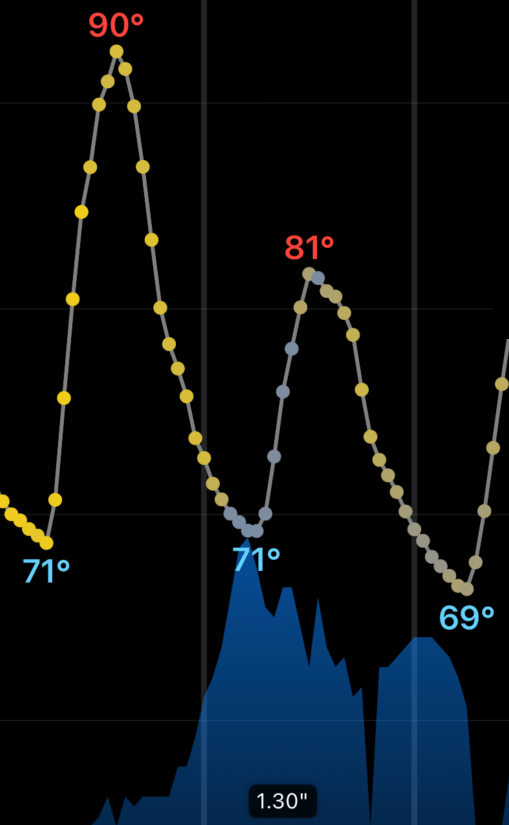
Weathercaster shows forecasts in a chart format. Point color tells you about cloud cover, with yellow for sunny stretches, gray for cloudy hours, and in-between shades for mixed conditions. Blue points mark likely rain, while white points mark likely snow. Tap and hold anywhere on the chart to inspect a specific hour and see the detailed weather data.

  • Point color signifies sun, clouds, rain, and snow.
  • The line chart rises and falls with temperature, with labels showing maximums and minimums.
  • Lightning icons ⚡️ appear on the chart for hours when lightning is possible.
  • Blue shading under the line chart shows precipitation probability.
  • Precipitation events are labeled with the likely amount of rain ☔️ and/or snow ❄️ that will fall.
  • You can also activate a wind chart to see wind speed and direction.
  • In Pro, faded ghost lines can show older model runs so you can see where the forecast used to be and how it is changing.
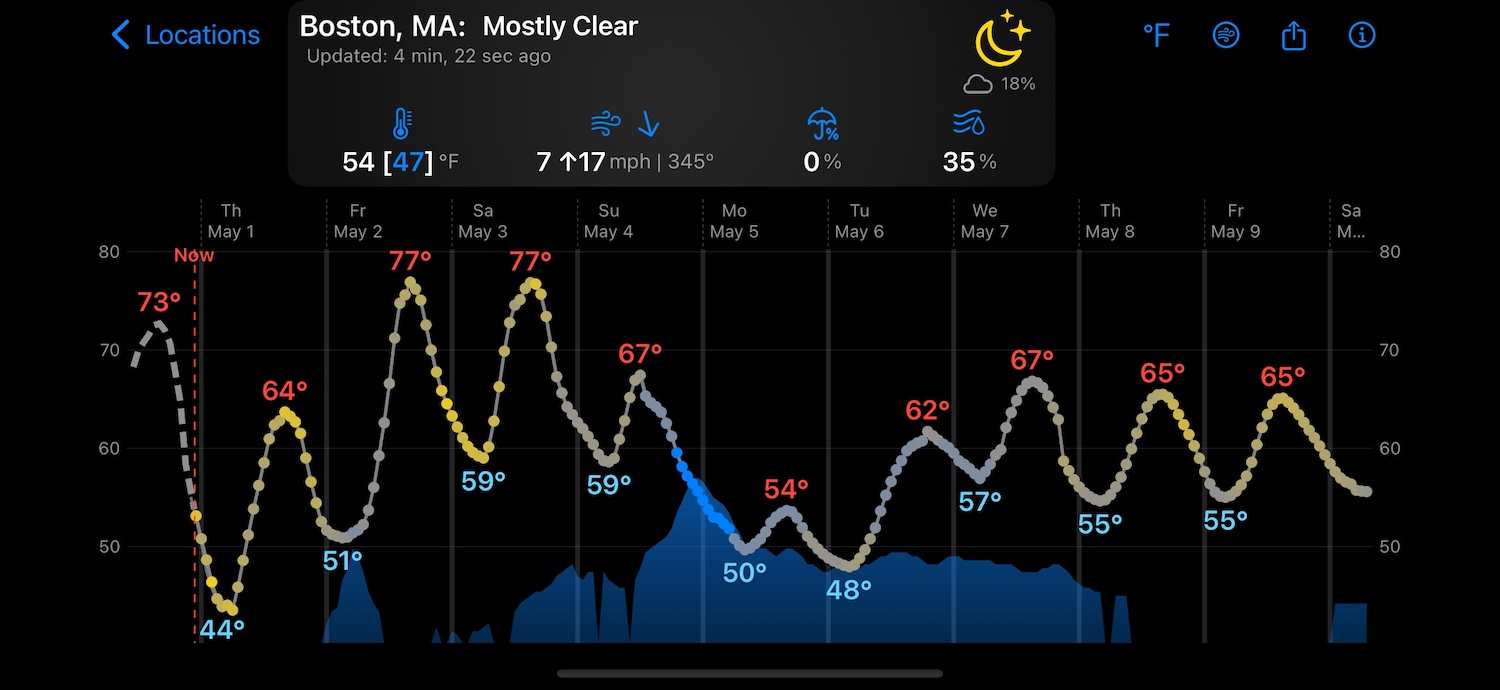
  • Landscape mode gives you a full 10-day forecast view.
Weathercaster chart screenshot
Weathercaster full-screen landscape forecast view
Landscape mode

Turn your phone sideways for a wider forecast read

The app's help text points out one of the most useful tricks: rotate into landscape to see a full-screen 10-day forecast with much more room to read changing conditions.

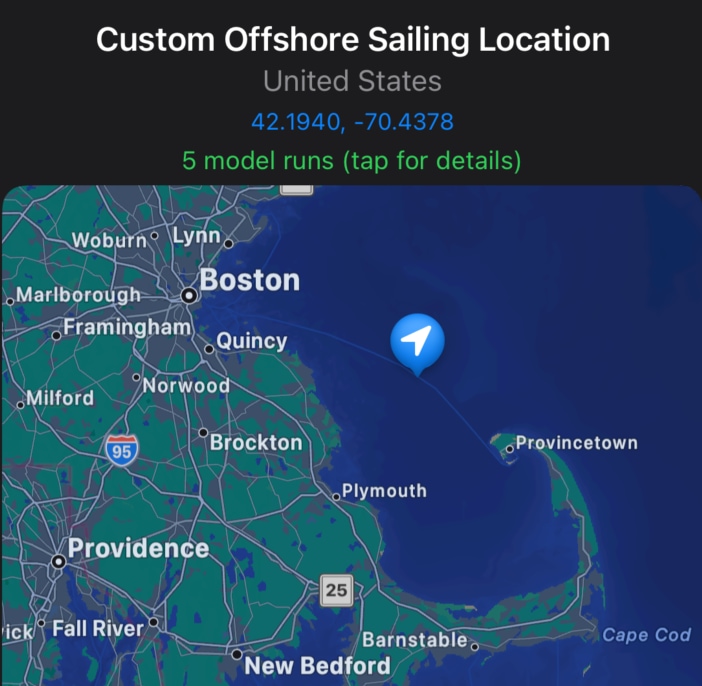
Weathercaster custom map location adjustment
Custom locations

Fine-tune the exact forecast spot

When search is close but not exact, Pro lets you move a pin on the map to dial in trailheads, ski areas, offshore points, or other hard-to-name places.

Share and inspect

Go deeper without getting lost

Zoom the chart, open the separate wind view, share current conditions or the forecast image, and export CSV data when you want to work with the forecast outside the app.

See what Weathercaster includes, and what Pro unlocks

Free mode already covers the core chart-first forecast experience. Pro adds more places, more control, and more ways to compare how the forecast changes over time.

Included Free

Everyday weather, without paying first

Free mode gives you the core Weathercaster experience for daily weather monitoring, including the chart view, quick inspection, widgets, and Apple Watch support. The main limitations are the number of locations you can add, small promos for our other apps, and the absence of Weathercaster's more advanced tools.

  • Add up to two locations through search.
  • Use the full chart-first forecast view with tap-and-hold inspection.
  • Keep your top location available on Apple Watch.
  • Keep your top location available in widgets.
  • Free locations stay simple, so they cannot be renamed or reordered.
  • Free users may see small, unobtrusive promos for other Catspaw apps, and those can be removed by upgrading to Pro.
Unlock with Pro

More places, more control, and deeper weather context

Pro is built for people who track more than a couple of spots, need more precise location control, or want to understand how the forecast is changing over time.

  • Track unlimited locations.
  • Rename and reorder your location list to keep it organized.
  • Move locations on a map for finer control, including offshore points and remote backcountry spots that do not show up in search.
  • Use shortcuts to add active tropical storms and hurricanes.
  • Export forecast data as CSV for offline analysis.
  • Show multiple model runs on the chart to see how forecasts are trending over time.
  • Remove the small promos and go ad-free.

Questions people usually ask first

Yes. Weathercaster is free to download from the App Store.

Pro unlocks unlimited locations, location renaming and reordering, shortcuts for active hurricanes and tropical storms, map-based location adjustment, model runs on the chart, CSV export, and removal of ads.

Weathercaster runs on iPhone, iPad, Mac with Apple silicon, and Apple Watch.

Weathercaster uses Apple WeatherKit data, which Apple sources from forecast offices around the world. You can learn more about Apple WeatherKit's data sources here.

Yes. You can search for places, use your current location, or add a random location. Pro users can also add active hurricanes and tropical storms and fine-tune exact forecast spots on a map.

Weathercaster is built around the chart itself. You can see temperature, cloud cover, precipitation, wind speed and direction, lightning probability, and more at the same time. It also makes it easier to tell when a weather event will begin and end than with a traditional weather app. Rather than just knowing it will rain sometime today, Weathercaster helps you see when it is most likely to start and stop.

Yes. Weathercaster was originally inspired by meteorology tools used on wind farms, where chart-based forecasts help operators understand exactly when weather events will start and stop. That same timing precision is useful for hikers, sailors, boaters, and pilots. Pro users can place a forecast pin at exact coordinates on a map, including offshore points, mountain summits, and trailheads that do not appear in standard location search.

Unlike Carrot Weather, which focuses on personality and customizable layouts, Weathercaster is built around a single chart that shows temperature, cloud cover, precipitation, wind, and lightning simultaneously without switching views. Unlike Apple Weather, which uses daily icon grids, Weathercaster uses hourly line charts that make it easy to see when conditions change. Both Weathercaster and Carrot Weather use Apple WeatherKit data, but Weathercaster's chart-first design prioritizes information density and timing.

Yes. You can download a forecast before heading out, and it will remain viewable in the app while you are offline. This is useful for backcountry trips, sailing, or any situation where you may lose cell service.

Yes. Weathercaster includes Home Screen widgets for iPhone and iPad, plus a dedicated Apple Watch app. Both provide glanceable access to your top location's forecast without opening the full app.

Weathercaster is free to download and use with up to two locations. Pro is available as an in-app purchase and unlocks unlimited locations, hurricane tracking, map-based location adjustment, model-run overlays, CSV export, and ad removal. Check the App Store listing for current pricing.

No. Weathercaster has a strict privacy-first policy. The app uses no third-party analytics, no ads, and no trackers. Your location is only accessed when you specifically request a forecast, and no personal data is collected or shared.

Learn more about Weathercaster

Detailed comparisons, use-case guides, and educational resources to help you get the most out of chart-based forecasting.

Weathercaster app icon WeatherGraph icon art

From WeatherGraph to Weathercaster

In 2013, Mark and Jackson met at Southside Espresso in Houston, Texas. At the time, they were both independently building apps, trading ideas over coffee and staying connected in the years that followed. Eventually, they decided to collaborate.

Jackson's work in renewable energy, specifically on a meteorology team supporting wind farms, sparked the core idea. Forecast data for energy operators was delivered in chart form, making it faster to interpret and easier to act on. Compared to traditional weather forecasts, charts made complex data immediately understandable.

That insight became their first app: WeatherGraph. Built using National Weather Service data, it focused on clarity and speed through visual forecasting. While powerful, it had limitations, most notably being restricted to the United States due to its data source.

Years later, in 2024, Jackson set out to reimagine the concept from the ground up. The new project, initially codenamed Weatherpaw, was designed to take advantage of modern Apple technologies like SwiftUI and WeatherKit, while expanding beyond earlier constraints.

Mark rejoined the effort, and together they built something new.

That project became Weathercaster, a modern, visual-first weather app rooted in the same original idea: weather should be fast, clear, and intuitive to understand.

Start tracking weather visually

Download Weathercaster from the App Store, build your first forecast list, and decide later whether you want Pro's deeper weather tools.

Download on the App Store