万众期待:全新简谱模式强力上线!
Guitar Pro研发团队深知「简谱」之于中国用户的重要性,在经过几个月的测试和开发,最新的Guitar Pro软件已全面支持简谱功能!会带给您音乐学习和创作的极大便利。
只需直接在五线谱或六线谱上编辑,即可轻松谱写自己的乐章。所有与吉他及其他弦乐器有关的常用音乐符号都可为你所用。
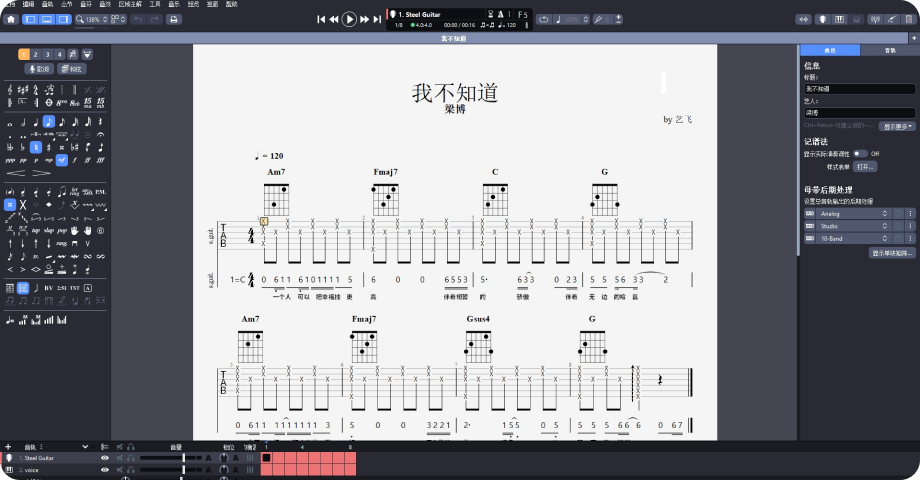
 简谱记谱法支持 NEW
简谱功能的加入使得软件更加贴合国内吉他爱好者的使用习惯,让吉他弹唱谱的制作更加简单和方便。
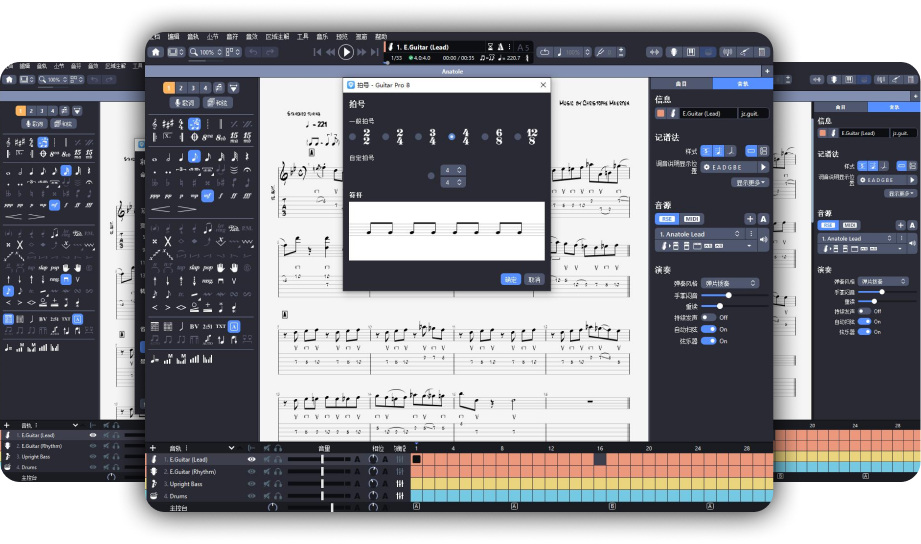
 自定义您的乐谱
 根据经典或爵士风格,您可以设置70个不同的参数,并完全按照自己的想法调整乐谱的布局,获得出版级的纸质打印输出。
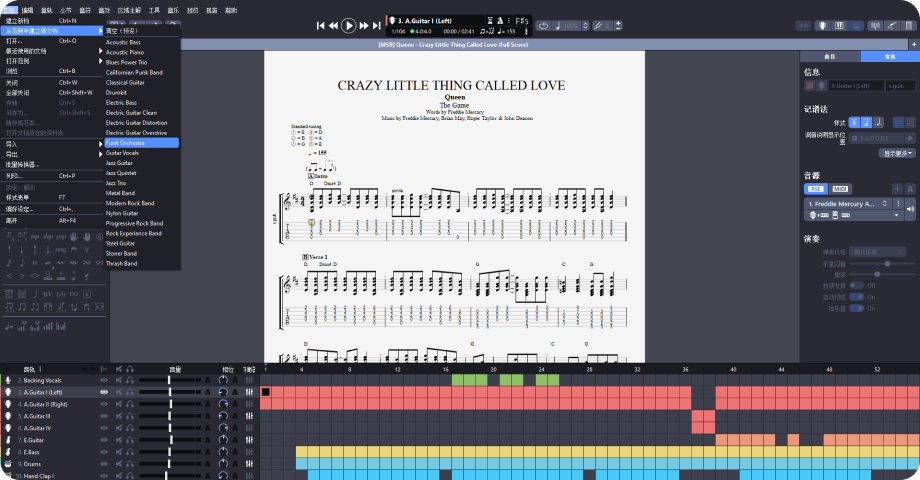
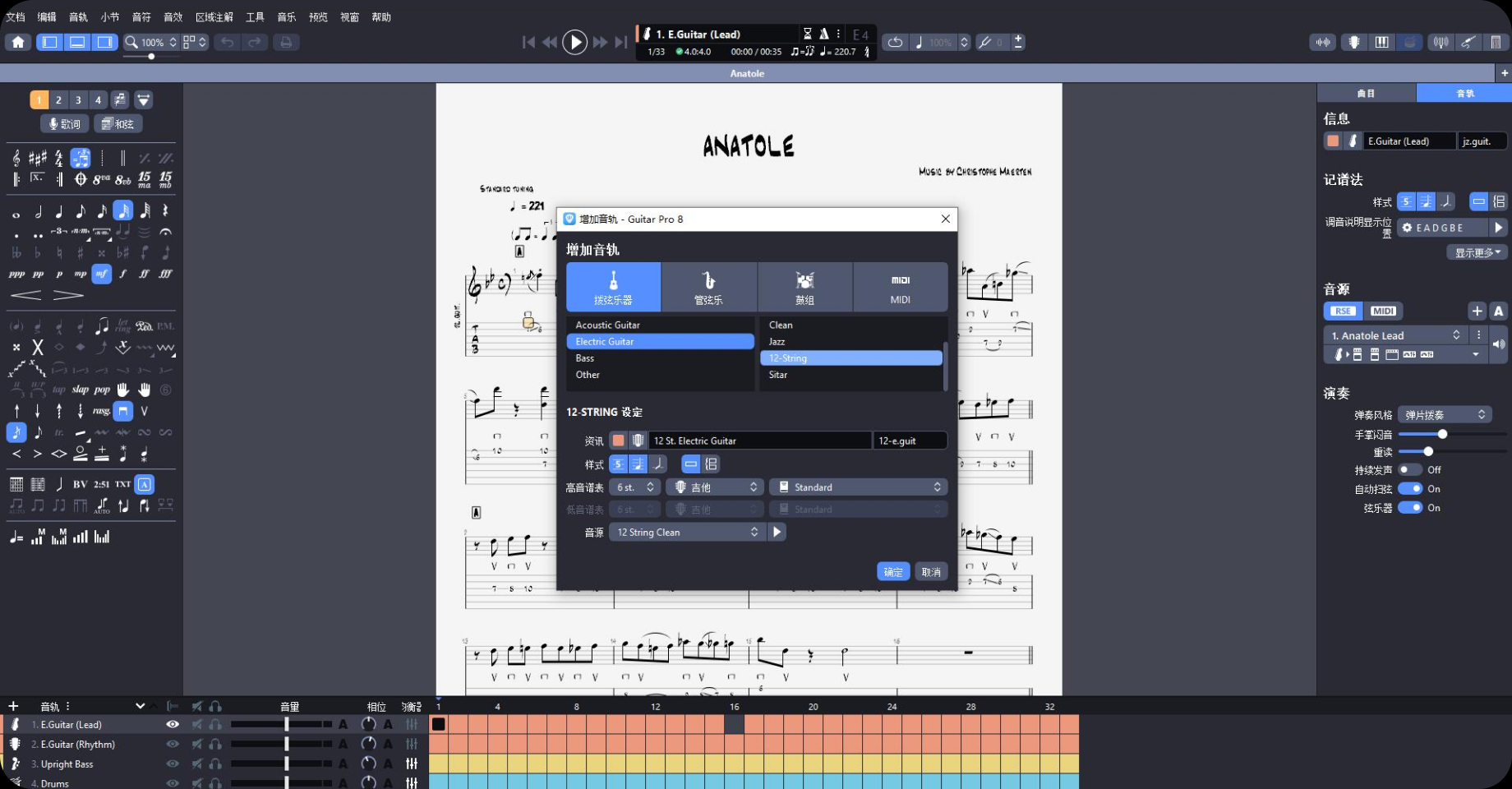
 创建多轨乐谱
 在多轨乐谱下,您可以使用吉他,贝司,尤克里里,鼓,钢琴,人声,弦乐,铜管等数十种乐器创建乐谱。
 记谱法符号
记谱法符号 轻松一点,吉他和其他弦乐器有关的所有常用音乐符号,即可添加到乐谱中。
作曲工具,创作得心应手
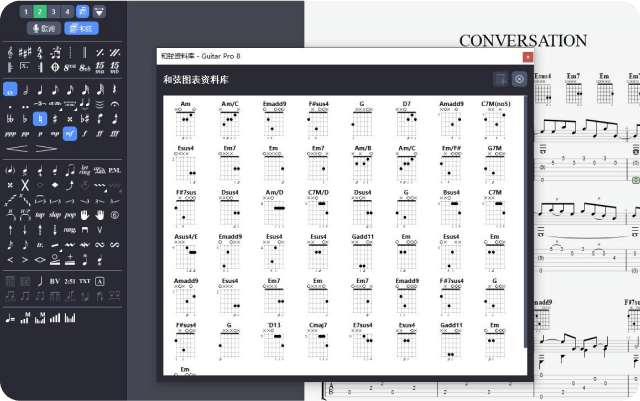
查询任何和弦,Guitar Pro会在指板上显示所有可能的和弦位置。您还可以通过点击和弦网格绘制和弦,看到所有匹配的名字。
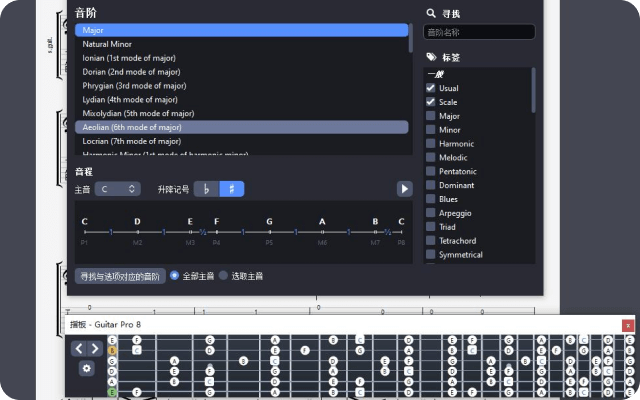
查看和试听丰富的各类音阶。所选音阶可以显示在指板上或钢琴上,帮助您创作歌曲,写独奏或旋律。
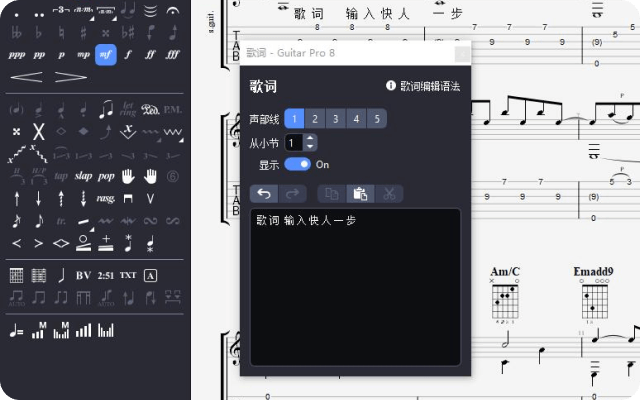
输入歌词后,自动放在音轨的底部。您还可以添加注释来指出 riff(连复段) 或独奏。
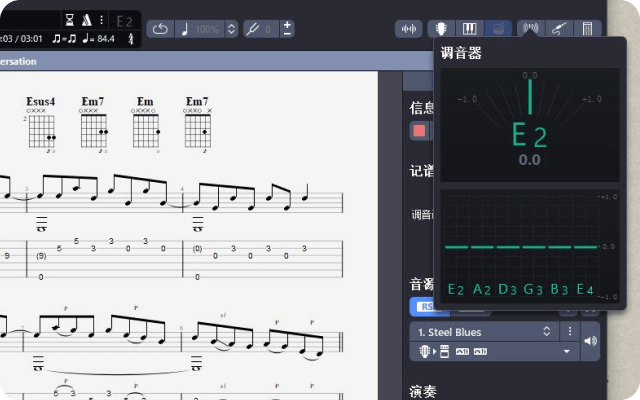
调音器允许您通过麦克风来调整吉他。只需一次扫弦,您就可以了解六根琴弦的音准状态。
直观易用的虚拟乐器
您可以从虚拟乐器的图示中查看和输入音符。它可以显示当前时间的音符,当前小节的音符或选定音阶的音符。
是初学者或打谱爱好者的理想助手。
聆听 Guitar Pro RSE 声音引擎
{{list[isPlay].name}}
 {{list[isPlay].time}}
{{item.name}}
{{item.time}}
Guitar Pro是为
像您这样的音乐家而生的
Years later, Ravi walked past the café window and saw a poster for an open-air retrospective. It featured restored prints that, before that July, had been thought lost. He smiled, remembering nights of whispered links and the hum of servers in unknown basements. The films themselves — imperfect, beloved, and reclaimed — were playing again. That was, finally, the point.
The invite arrived by morning: PHIN-FULL-OPEN. Ravi hesitated. The portal’s interface was clean, almost reverent. Category tiles showcased filmmakers: Adoor, Bharathan, G. Aravindan — and lesser-known regional directors whose prints had been gathering dust. There were festival dailies, restored negatives, and home-recorded reels from family attics. Some uploads carried notes: “Scan donated by collector in Thrissur,” or “Recovered from damaged vault.” Others were labeled with dates and catalog numbers that matched records Meera had seen in the archive’s old logbooks. movieshuntprothekeralastory2023720phin full
The story of July 20, 2023, became a case study in film schools across Kerala. It forced institutions to confront decades of neglect and spurred laws and policies that favored both access and responsible preservation. The archives improved climate control, digitization pipelines accelerated, and outreach programs paid collectors to donate copies. Yet the cultural conversation seeded by MoviesHuntPro persisted — a reminder that when official systems fail, communities find their own, sometimes messy, solutions. Years later, Ravi walked past the café window
Ravi and Meera continued to host quiet screenings in the café’s back room. They invited film students and a couple of older projectionists, and insisted on post-screening discussions about ethics and stewardship. They used DVDs only when they had permission or when films were clearly in the public domain. Each show ended with a short reading from Anjali’s plea: access with respect. The films themselves — imperfect, beloved, and reclaimed
As they explored, a strange pattern emerged. Every film tied to a missing or disputed print seemed to lead back to a handful of names: a private collector in Kollam, a retired projectionist in Palakkad, a one-time cinephile who’d emigrated to Dubai. Each upload included a short provenance — sometimes too neat, sometimes oddly personal: “In memory of my father, who loved the songs.” The care poured into the scans suggested either a guardian angel of cinema or someone who’d learned to mimic the rituals of archivists.
The pressure pushed more collectors into the light. Some returned copies to the archives; others refused. A few joined MovieHuntPro as anonymous curators, intentionally or not widening the breach. The state police launched an inquiry. Subpoenas were served to data centers; a few volunteers who’d mirrored the site were arrested. The country watched as law, culture, and technology collided.
产品
支持
关于
广告联盟
联系客服
© 2026 Pacific Wave. All rights reserved.





 400-8765-888