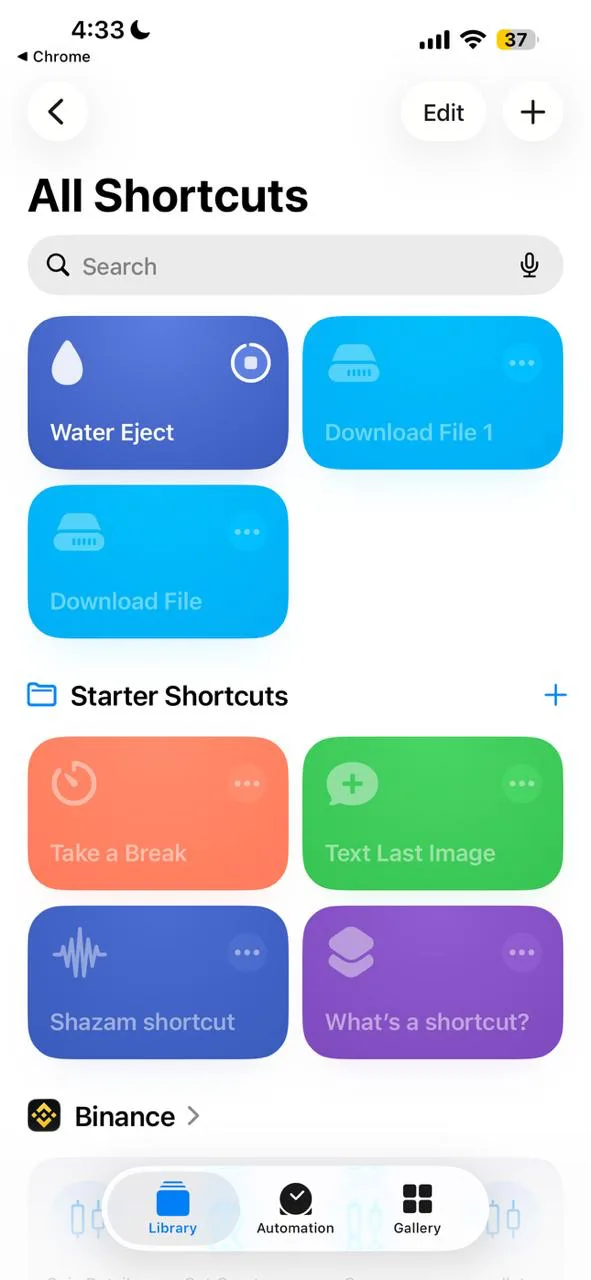
Remove water from your iPhone speaker in seconds. This quick and safe tool helps you expel water from the speaker grill of your iPhone to restore clear audio and protect the functionality of your device.


It is a custom iOS shortcut developed to remove water and dislodge dust from the iPhone and iPad speakers. It works by playing a low-frequency sound that helps push water and dust out of the speakers, helping keep the audio quality intact.
Unlike the Apple Watch, the iPhone does not have a built-in water ejection feature. However, iPhone users can still use this helpful function through a custom-developed tool, called Water Eject Shortcut, that is simple and convenient to use.
Below is a complete step-by-step guide on how to add the Water Eject feature to your iPhone:
Open your iPhone's web browser and download the Water Eject Shortcut from the button.
Tap the link on your iPhone. It will automatically open in the Shortcuts app (pre-installed on iOS, or you can download it for free from the App Store). The Shortcut will be installed instantly on your iPhone.
When the Shortcut page opens, tap the 'Add Shortcut' prompt when it appears.
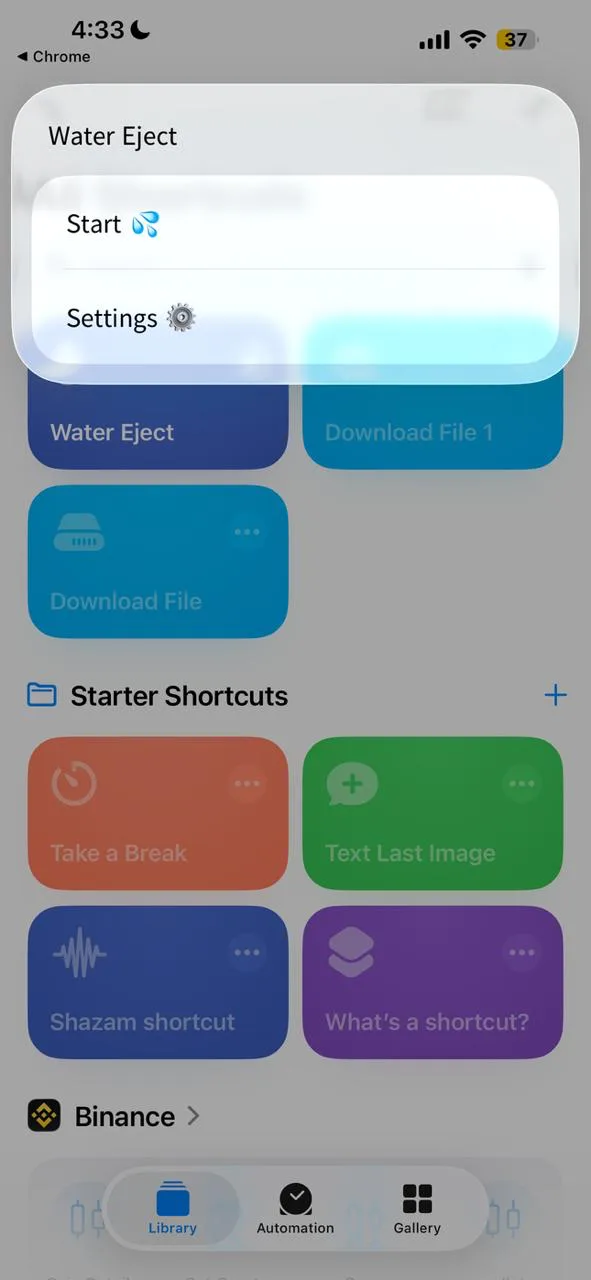
Open the Shortcuts app, search for Water Eject, and click on it to activate the shortcut or simply say, 'Hey Siri, run Water Eject.'
Finally, tap 'Begin Water Ejection' to start removing water from your iPhone's speakers.
Imagine you're enjoying a coffee or a cold drink while scrolling through your iPhone. Suddenly, your hand slips and liquid spills onto your phone, leaving the speakers wet and sound muffled. Moments like this highlight why having a Water Eject Siri Shortcut on your iPhone can be incredibly useful.
Here's why it is a must-have shortcut for iPhone users:
The shortcut expels water and dust from your iPhone and iPad speakers in a short time. Its low-frequency sound ensures efficient water removal while protecting your device's speaker quality.
Using the shortcut is quick and easy. Simply tap the Shortcut or say, 'Hey Siri, Run Water Eject' and it will start removing water and dust from your iPhone or iPad instantly. There is no complicated setup involved - just a one-tap solution to restore your audio in a few seconds.
Unlike the Apple Watch, which has a built-in water ejection feature, iPhones don't have such an amazing tool. You can not find it in the Shortcuts Gallery; instead, it is custom-developed, especially for iPhone users.
The iPhone Water Eject is completely free to use. You can download it easily through the iCloud link and start using it immediately - no subscriptions, hidden fees, or in-app purchases required.
Dry your phone first using a towel or cloth to remove excess moisture before activating the shortcut.
Run Water Eject multiple times if needed to remove stubborn water or dust particles that may require a second or third run for better results.
Use the Shortcut with Siri by saying, Hey Siri, run Water Eject' for faster and emergency access to the Water Eject feature.
It's recommended to add the shortcut to your phone's Home Screen. For that, click the 3 dots and select 'Add to Home Screen' for quick, one-tap access whenever required urgently.
Great shortcut, easy to install, does what it says. Happy with it.
Never writing a review but this one deserves it. Saved my iPhone's speakers twice this week alone.
Why doesn't Apple just build this in? Until they do, this shortcut is the next best thing.
Downloaded today, tested it, love it. Adding to the ever-growing list of shortcuts I can't live without.
Tested with a few drops of water intentionally. Cleared it up fast. Good to know it works.
Phone fell in dog's water bowl. Ran this three times and it sounds perfect now. Five stars!
Download the Water Eject Shortcut now. It's free, safe, and takes seconds.
Download Free ShortcutTitle avengers aio v2.5.0.exe Opening (establishing scene / tone) A flicker of blue-white light from a laptop screen cuts through the dim of a cramped apartment. The filename sits in the downloads folder like a quiet promise: avengers aio v2.5.0.exe. Outside, the city hums; inside, the cursor hovers, waiting. Paragraph 1 — Description / object focus The file name is utilitarian and oddly cinematic at once: "avengers" suggests coalition and power, "aio" implies an all-in-one toolkit, and "v2.5.0" pins it to a specific, slightly matured release. The ".exe" extension betrays its origin—Windows, executable, potentially transformative or dangerous. It is both verb and relic: a package that could assemble allies or unleash something unforeseen. Paragraph 2 — Character / human reaction Marta breathes in slow, measured pulls. She has downloaded stranger things on stranger nights—drivers, cracked games, firmware updates—but this feels different. Her fingers drum on the edge of the keyboard as she scans the forum thread that led her here: promises of automation, shortcuts for tedious tasks, whispers of backdoors that might be more myth than mechanism. Trust is a negotiation between need and fear; her cursor trembles on the "Run" button. Paragraph 3 — Backstory / context The program was born in message boards and late-night GitHub forks: a patchwork of scripts, compiled modules, and a single ambition—consolidation. It aggregates tools—network scanners, automation macros, convenience features—into a neat, deceptively simple package. Its changelog boasts small, precise iterations: v2.4.8 fixed a crash on startup; v2.5.0 introduced a streamlined GUI and optional plugin support. Each update is both balm and warning, a sign of active maintenance and of a creator who knows how to hide intentions in release notes. Paragraph 4 — Suspense / possibilities What will happen if she clicks? The optimistic route: a tidy interface unfolds, tasks become trivial, hours reclaimed. The darker thread: hidden payloads activate, a quiet siphon of data begins, or system integrity peels away like old wallpaper. The file could be the tool she needs or the beginning of something that stains everything after. Paragraph 5 — Internal dilemma / moral reflection Marta's hesitation is not only about binary code; it's about consequences. Convenience often arrives dressed as harmless efficiency. To accept that trade is to gamble with privacy, control, and trust. She imagines the faces of colleagues whose systems could be affected, the reputations that could tilt with one misstep. To run the program is to decide which future to endorse. Paragraph 6 — Action / decision She breathes out and double-clicks. The screen goes black for a heartbeat, then a window blossoms—unadorned, professional, an installer with standard prompts. She reads the EULA with a practiced eye, scanning permissions for red flags. Nothing overt appears; there is an option to install plugins, to allow automatic updates. She unchecks everything she doesn't need. Proceed. Install. Finish. Closing (aftermath / lingering question) The program hums in the background like a new appliance, its icon a small, inert promise. For now, it performs as advertised—automations that save time, a dashboard that centralizes tasks. But in the small hours she still glances at network logs and system monitors, searching for the subtle signature of unintended consequence. The file remains on disk, versioned, dated: avengers aio v2.5.0.exe—both achievement and question mark, a symbol of modern trade-offs between power and prudence.